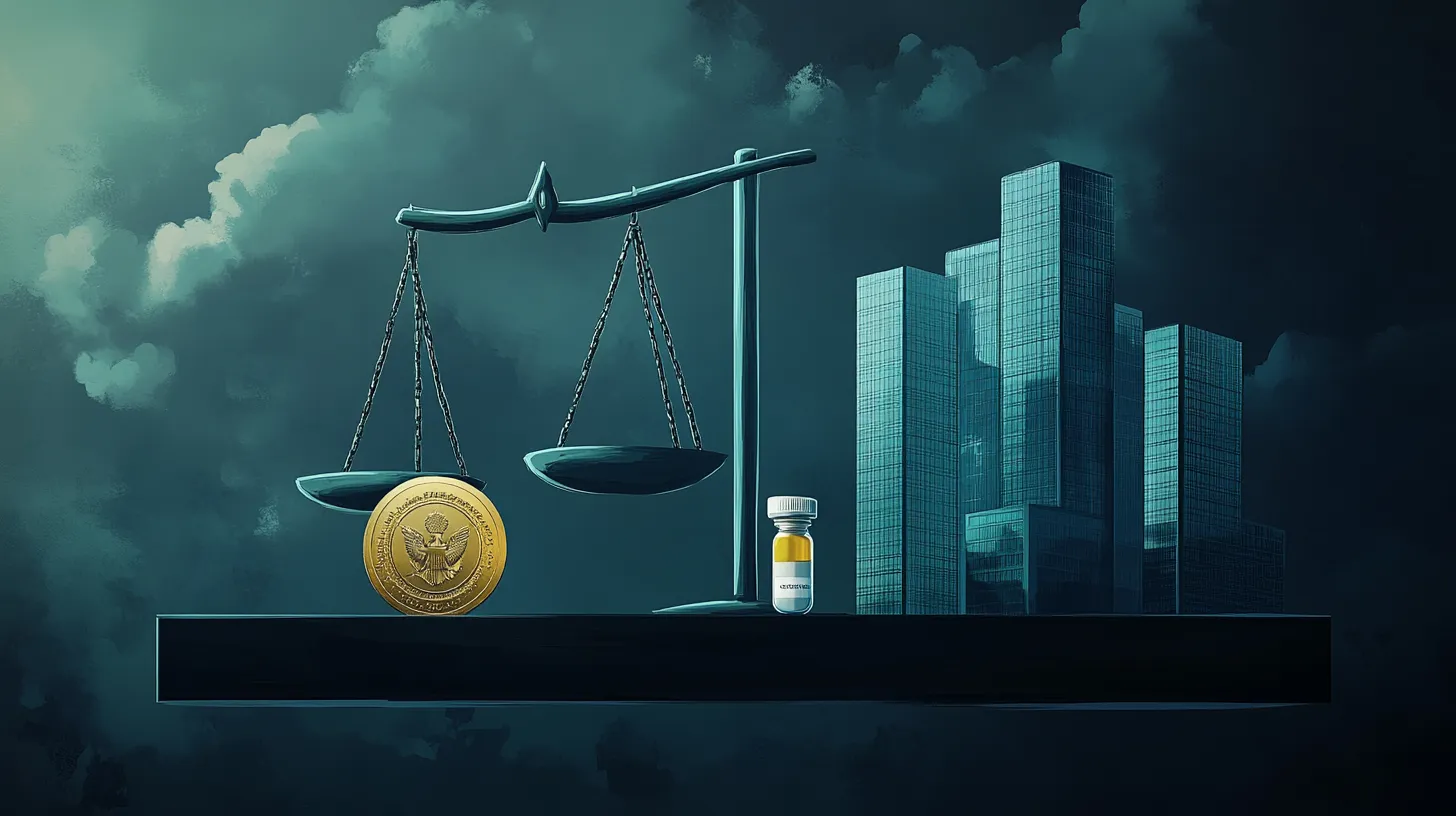
The most significant federal enforcement action against PBMs in history just produced binding consent orders against companies that control 80% of American prescription drug access. Here’s what the government actually won — and what it didn’t.
In September 2024, the Federal Trade Commission did something it had never done: it sued all three major pharmacy benefit managers simultaneously, in a single administrative complaint, alleging that CVS Caremark, Express Scripts, and OptumRx ran a coordinated rebate scheme that artificially inflated insulin prices and shifted billions in costs onto patients. The complaint was the culmination of years of FTC investigation, two interim reports, and enough documented evidence that even the agency’s Republican commissioners had previously voted to publish the findings.
By early 2026, the case was resolving — not through adjudication, but through negotiated settlements that the FTC is calling landmark. The question worth asking is whether “landmark” is a description or a sales pitch.
What the Lawsuit Alleged
The core allegation was structural, not incidental. The Big Three, the FTC argued, created the conditions for insulin price inflation by steering formulary placement toward products with the highest rebates. Drug manufacturers — knowing that preferred formulary position required large rebates — competed by raising list prices, not lowering them. More list price meant more rebate headroom. PBMs pocketed a portion of the rebates. Patients on high-deductible plans and those paying coinsurance paid out-of-pocket costs tied to the inflated list price, not the negotiated net price.
The mechanism is worth sitting with: the people who were supposed to be negotiating lower drug prices had a direct financial incentive to negotiate higher list prices. The rebate was the revenue. The patient was the cost center.
The Settlements: What ESI Agreed To
Express Scripts settled first, on February 4, 2026. The consent order, which carries the force of law and a ten-year compliance monitoring period, requires ESI to make several significant changes.[2]
The company must stop placing high-list-price drugs on standard formularies at an advantage over identical lower-cost alternatives — ending the “rebate wall” practice at the core of the FTC’s complaint. It must offer plan sponsors a standard benefit design where member cost-sharing is calculated on net price rather than list price — meaning patients’ out-of-pocket costs would be based on what the drug actually costs after negotiation, not on the inflated sticker price. It must delink manufacturer fees from list prices, cutting the direct financial connection between PBM revenue and how high a drug’s list price is set. It must expand transparency to plan sponsors, including drug-level cost reporting and disclosure of broker compensation. It must transition pharmacy reimbursement for community pharmacies to a model based on actual acquisition cost plus a dispensing fee, rather than opaque spread-based contracts.[8]
It must also reshore its group purchasing organization, Ascent, from Switzerland to the United States — a provision the FTC framed as returning over $750 billion in purchasing activity to domestic oversight over the order’s term.[9]
Most provisions carry an implementation deadline of January 1, 2027.[9] That means the operational changes are not yet in effect. Patients paying out-of-pocket costs tied to inflated list prices today are not yet protected by the settlement terms.
The FTC projected these changes would reduce patient out-of-pocket costs by up to $7 billion over ten years.[2]
CVS Caremark filed a joint motion with the FTC on March 23, 2026, to withdraw from the adjudicative proceeding and submit a proposed settlement for Commission review. Industry legal analysis confirmed the Caremark agreement closely mirrors the ESI framework.[3] Final terms were pending as of April 2026. OptumRx negotiations were described by the FTC in March court filings as showing “significant progress,” with the adjudicative stay extended to allow additional negotiation time.[4]
If all three settle on substantially the same terms, the FTC will have set industry-wide operational standards through consent orders rather than adjudicated findings of law. That’s either a pragmatic win or a negotiated détente, depending on what you think the goal was.
The TrumpRx Wrinkle
One provision in the ESI consent order stands apart from the rest, and not entirely for reasons the FTC advertised. Section III requires ESI to count purchases made through the TrumpRx platform toward member deductibles and out-of-pocket maximums — but only if and when legislative or regulatory changes exclude direct-to-consumer drug purchases from Medicaid Drug Rebate Program and 340B rebate calculations.[8] The FTC announced the ESI settlement one day before the TrumpRx platform launched.[9]
The administration used an antitrust enforcement settlement to embed its preferred drug pricing initiative into the operational requirements of the largest PBM in the country. Whether TrumpRx ultimately delivers on its promise is a separate question. What’s notable here is the mechanism: the consent order converts a policy preference into a compliance obligation. That’s a consequential use of enforcement authority — and one that points in a different direction than the stated goal of structural PBM reform.
What the Orders Don’t Cover
The settlements are narrow. They address insulin pricing specifically and the rebate mechanics that drove it. They do not address:
- Spread pricing in commercial drug benefits broadly
- DIR fees and retroactive pharmacy clawbacks
- Specialty drug pricing practices, which the FTC’s second interim report documented separately — and with equal alarm
- Formulary manipulation outside the insulin category
- Vertical integration itself — the structural condition that makes all of these abuses possible and self-reinforcing
No admission of wrongdoing appears in any of the settlements. This is standard for consent orders, but it matters here. The FTC documented patient harm at scale. Billions of dollars in inflated costs, transferred from patients to PBM revenue lines. No corporate officer faces personal consequence. No finding of liability attaches. The companies reform their insulin rebate practices, pay nothing, and continue operating the same vertically integrated structures that generated the problem.
The Institutional Near-Collapse
There’s a context the settlements don’t explain on their own: this case almost died on the vine, and not for legal reasons.
When the FTC filed the complaint in September 2024, its two Republican commissioners — Andrew Ferguson and Melissa Holyoak — recused themselves. The case was prosecuted by the three Democratic commissioners. Then, in January 2025, Chair Lina Khan resigned. On March 18, 2025, the Trump White House fired the two remaining Democratic commissioners — Alvaro Bedoya and Rebecca Kelly Slaughter — in a move both commissioners called illegal and are still contesting in court.[6] The case was left with no eligible commissioners. On April 1, 2025, the FTC’s general counsel filed for an administrative stay, citing the fact that there were no sitting commissioners able to participate.[5]
Former FTC Chair Lina Khan described the stay as “a gift to the PBMs.“[5]
The case survived only because Ferguson reversed his recusal days later — citing ethics consultations with agency attorneys — and shortly thereafter a third Republican commissioner, Mark Meador, was confirmed by the Senate.[7] The stay was lifted in August 2025 and the case restarted. An evidentiary hearing was scheduled for April 8, 2026.[7]
The ESI settlement was then approved by a 1–0 commission vote. Ferguson voted yes; Meador recused himself.[10] The most consequential federal enforcement action against PBMs in the industry’s history was approved by a single commissioner — the same commissioner who had originally recused himself from the case, whose return was the only thing that kept it alive.
The settlements that followed came together between February and March 2026 — under a Republican-majority FTC, in an administration whose party had stripped PBM reform language from legislation just months earlier. That political context is not a reason to dismiss the settlements. But it is a reason to assess them clearly.
The “Already Doing This” Problem
Here’s the observation an insider would make that a general reader would likely miss: the ESI settlement was described by Cigna executives, in investor calls following the deal, as largely codifying reforms the company was already implementing.[4] The settlement wasn’t expected to materially affect the company’s long-term financial performance.
That framing cuts two ways. It could mean the FTC successfully pressured industry behavior before the formal settlement — a real victory for regulatory deterrence. Or it could mean ESI gave up practices it was already exiting, and received in return a decade of regulatory cover under a consent order that effectively closes the door on more aggressive enforcement of the same conduct.
People who’ve worked inside this industry know the difference between a company reforming under genuine pressure and a company blessing its existing roadmap with a federal imprimatur. The public record doesn’t fully resolve which this is. What it does show is that the most favorable characterization — “landmark reform” — deserves more scrutiny than it has received.
The OptumRx Question
As of this writing, OptumRx has not settled. If it does, on terms substantially similar to ESI and Caremark, the result is a uniform industry baseline established by negotiation rather than law. That has a certain efficiency: three consent orders effectively become a regulatory standard that applies to 80% of commercial prescription claims.
But a negotiated standard is not a legal finding. It can be revisited, waived, or allowed to atrophy under a future FTC. Consent orders that depend on monitoring by an agency whose independence has already been demonstrated to be fragile are only as durable as the political will to enforce them.
What This Is and What It Isn’t
The FTC’s actions are the most consequential federal enforcement against PBMs in the industry’s history. That’s a low bar — the industry operated largely unchecked for decades — but clearing it still matters.
What the settlements establish: that rebate-driven formulary manipulation inflating list prices is a federal enforcement target, that plan sponsors have a right to transparency they’ve historically been denied, and that patient cost-sharing should be calculated on actual net prices rather than inflated list prices.
What they don’t establish: that the structural conditions enabling these abuses have changed, that vertical integration between PBMs and insurers is a solved problem, or that the companies running 80% of American drug benefits have been held to account in any meaningful legal sense.
The FTC did real work here. The question is whether consent orders negotiated under political duress, covering a narrow slice of documented harm, with no admission of liability, approved by a single commissioner, and monitored by an agency whose independence is actively contested — whether that constitutes accountability or a managed outcome that lets everyone declare victory and move on.
The answer, right now, is somewhere between the two. Which is to say: insufficient.
Sources
-
FTC Administrative Complaint, In the Matter of Caremark Rx, LLC, et al. (Sept. 2024) — https://www.ftc.gov/legal-library/browse/cases-proceedings/221-0114-caremark-rx-zinc-health-services-et-al-matter-insulin
-
FTC Press Release, “FTC Secures Landmark Settlement with Express Scripts” (Feb. 4, 2026) — https://www.ftc.gov/news-events/news/press-releases/2026/02/ftc-secures-landmark-settlement-express-scripts-lower-drug-costs-american-patients
-
Buchanan Ingersoll / Mondaq, “CVS Caremark Settles FTC Insulin Pricing Lawsuit” (Mar. 31, 2026) — https://www.mondaq.com/unitedstates/food-and-drugs-law/1766564/cvs-caremark-settles-ftc-insulin-pricing-lawsuit-key-developments-and-industry-impact
-
Healthcare Dive, “Optum Rx, Caremark Making ‘Significant Progress’ in Settlement Talks with FTC” (Mar. 5, 2026) — https://www.healthcaredive.com/news/optumrx-caremark-progress-ftc-settlement-insulin-case/813834/
-
Source on Healthcare Price and Competition, “Chaos at the FTC as Lack of Commissioners Temporarily Freezes Price Fixing Case Against Pharmacy Benefit Managers” (Apr. 16, 2025) — https://sourceonhealthcare.org/chaos-at-the-ftc-as-lack-of-commissioners-temporarily-freezes-price-fixing-case-against-pharmacy-benefit-managers/
-
Fierce Healthcare, “FTC Commissioner Firings Spark Legal Uncertainty in PBM Insulin Case” (Mar. 22, 2025) — https://www.fiercehealthcare.com/regulatory/ftc-commissioner-firings-spark-legal-uncertainty-pbm-insulin-case
-
Mintz, “PBM Policy and Legislative Update — Summer/Fall 2025” (Nov. 2025) — https://www.mintz.com/insights-center/viewpoints/2025-11-04-pbm-policy-and-legislative-update-summer-fall-2025
-
Federal Register Vol. 91 No. 29, “Express Scripts, Inc., et al.; Analysis of Agreement Containing Consent Order To Aid Public Comment” (Feb. 12, 2026) — https://www.federalregister.gov/documents/2026/02/12/2026-02844/express-scripts-inc-et-al-analysis-of-agreement-containing-consent-order-to-aid-public-comment
-
King & Spalding, “FTC’s ‘Landmark’ Settlement with Express Scripts: Impact on Pharma” (Feb. 2026) — https://www.kslaw.com/news-and-insights/ftcs-landmark-settlement-with-pharmacy-benefit-manager-express-scripts-impact-on-pharma
-
Courthouse News Service, “FTC Settles with Prescription Drug Middleman Giant to Lower Pricing” (Feb. 4, 2026) — https://www.courthousenews.com/ftc-settles-with-prescription-drug-middleman-giant-to-lower-pricing/